 Tokyo Go-Kart Tours
The Best Time for a Tokyo Go-Kart Tour: Mornings, Evenings and Seasons Compared
The best time for Tokyo go kart riding is a weekday morning for calm roads or an evening departure for the neon, and the season decides the rest. The best time for a Tokyo go-kart tour is a weekday morning for the calmest roads, or an evening departure if you want the city at its most photogenic. Spring is the busiest season in the operators' own calendars, so spring dates should be booked as early as possible. Karts are open vehicles with no roof and no sides, which makes weather part of the decision: winter rides need windproof layers and gloves, while summer midday slots face heat and sun on exposed roads. Rain rarely cancels a ride, but the two-hour bay route and the 75-minute premium loop feel the weather most of all. This page compares time of day, season and rain policy across the rides compared here in the Tokyo go-kart tour catalog so you can pick a slot that fits both the forecast and the crowds.
Evening departures end inside this neon. Photo: Basile Morin, CC BY-SA 4.0, via Wikimedia Commons
Quick answer Weekday mornings for light traffic, evenings for neon, spring books out first
Weekday morning departures give you the lightest traffic, while evening departures put you in the neon the neighbourhoods are famous for. Spring is the operators' busiest season and one major operator tells customers to book as early as possible for spring dates. Because karts are open vehicles, dress for the season: windproof layers and gloves in winter, and sun protection at midday in summer. Tours usually run despite the weather, and one bay-side listing makes rain calls by conditions with the shop.
Key takeaways
- Book early for spring and aim for a weekday morning slot for the quietest roads.
- If you want photos that look like Tokyo, an evening departure beats midday on every route.
- Leave a 30-minute buffer before your ride, since late arrivals can forfeit the slot with no refund.
- Weekday mornings for light traffic, evenings for neon
The Short Answer: Weekday Mornings and Neon Evenings
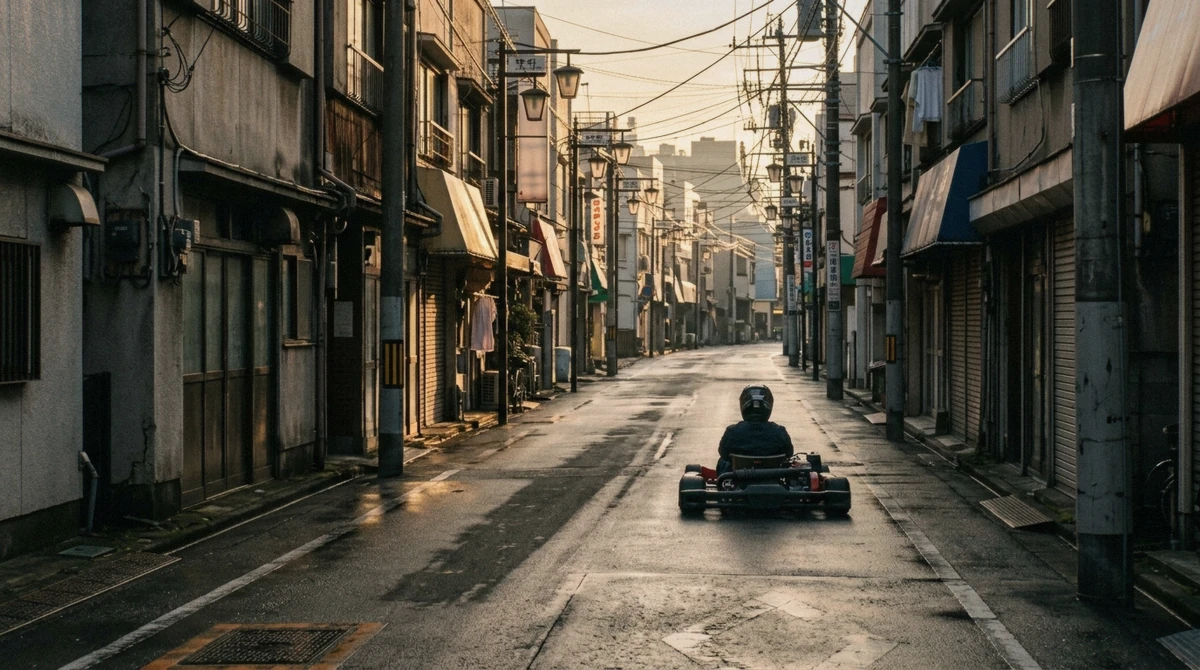
Operators run departures through the day on most routes, so the real choice is between two very different cities. Morning departures meet the lightest traffic, which matters when you are driving an open kart through intersections like Shibuya Crossing on the same signal cycle as everyone else. First-timers tend to be less nervous with fewer cars around, and reviewers often describe feeling tense for the first few minutes before settling in.
A calmer road is a faster way to enjoy the ride rather than stare at the kart in front of you.
Evening departures trade calm roads for atmosphere. The city neon that the neighbourhoods are famous for is switched on, and the photos the guides take at stops look completely different after dark. If the point of the ride is the pictures and the spectacle, evening is the slot to choose.
If the point is relaxed driving, go in the morning.
Which ride fits which slot
Every ride in this comparison runs small convoys, from five karts on the Shibuya Crossing tour to eight on the premium and east-Tokyo routes. That makes timing doubly important, because a small group that fills up cannot squeeze in a walk-up driver. The table below sets out what each tour costs, how long it lasts and how it is rated, so you can match a slot to a route before you book.
Prices are shown dollar first with the local figure in brackets.
| Tour | Price | Duration | Rating | Group limit |
|---|---|---|---|---|
| Shibuya Street Go-Kart Tour | $70 (¥10,500) | 1 hour | 4.9 from 1,893 reviews | 6 |
| Tokyo Tower & Shibuya Crossing Premium Go-Kart Tour | $115 (¥17,250) | 1h 15m | 4.74 from 666 reviews | 8 |
| Tokyo Bay 2-Hour Go-Kart Tour over Rainbow Bridge | $105 (¥15,750) | 2 hours | 4.82 from 112 reviews | not stated |
| Shibuya Crossing Go-Kart Tour with Photos | $89 (¥13,350) | 1 hour | 4.83 from 375 reviews | 5 |
| Asakusa, Skytree & Akihabara Go-Kart Tour | $96 (¥14,400) | 1h 10m | 4.66 from 783 reviews | 8 |
| Akihabara Original Go-Kart Tour | $61 (¥9,150) | 1 hour | 4.86 from 127 reviews | 6 |
Prices are shown with local figures for comparison and were against the live listings when this page was produced.
Time of Day: Traffic, Light and Temperature
Tokyo traffic follows a rhythm and the kart convoys feel it. Morning departures meet the lightest traffic, which the operators themselves point out as an advantage of early slots. Later in the day the arterial roads around Shibuya, Shinjuku and the bay fill up, and a convoy of five or six open karts moves at the pace of the traffic around it.
Evening brings a second consideration: after sunset the city is at its most theatrical, and guides keep the group together by adjusting speed to judge the lights, as several verified reviews describe.
Morning slots
Morning is the slot for drivers who want to think about the road rather than the spectacle. Traffic is light, temperatures are at their mildest for most of the year, and check-in is relaxed because the shop is not yet at peak. The one-hour loops from Shibuya Street Go-Kart Tour and Akihabara Original Go-Kart Tour suit a morning slot well, since a single hour in calm conditions is enough to cover the crossing or the electric town without fatigue.
Midday slots
Midday is the slot to treat with caution in summer. The karts are open vehicles with no roof, so a midday ride in hot weather means direct sun on exposed roads for a full hour or more. In the cooler months midday is the warmest and often brightest slot, which helps on the longer routes.
The two-hour bay ride and the 75-minute premium route have the longest road time, so they feel the heat, cold and sun more than the one-hour loops.
Evening slots
Evening is the slot for atmosphere. The neon districts look their best after dark, and the guide photos taken at landmark stops have a completely different character under city lights. Convoy guides adjust the pace to keep the group together through the lights, which makes the evening ride feel controlled even on busier roads.
Photographers should note that cellphones cannot be used while driving, guides take the photos at stops, and action cameras can be rented at the shop.
Season by Season on an Open Kart
Season changes the experience more than the time of day does, because the karts are fully open to the weather. There is no cabin to shelter in, so what you wear is what you get. Operators' own advice splits the year into two problems: cold wind in winter and heat and sun at midday in summer.
Spring: the busiest season
Spring is the operators' own busiest season, and one major operator tells customers to book as early as possible for spring dates. That is the single most actionable timing fact on this page: if your trip falls in spring, reserve your slot well ahead rather than hoping for walk-up space. Convoys are capped small, at five or six karts on the Shibuya rides and eight on the premium and east-Tokyo routes, so capacity is genuinely tight.
Summer: heat, sun and an early start
Summer midday rides face heat and sun on exposed roads, so the comfortable summer slots are morning and evening. An early departure lets you finish before the hottest hours, and an evening departure puts the ride after sunset when the temperature drops. Sunscreen and light clothing matter more on the two-hour bay ride than on the one-hour city loops, simply because the road time is twice as long.
Winter: windproof layers and gloves
Winter rides need windproof layers and gloves. At city speeds on an open kart, wind chill is the main enemy rather than the air temperature itself, and hands on the wheel feel it first. Choose the middle of the day in winter for the warmest light and air, and keep the ride to the one-hour loops if you are sensitive to cold.
The two-hour bay ride over Rainbow Bridge is spectacular but is the longest exposure on this list.
- Spring: book as early as possible, it is the operators' busiest season.
- Summer: avoid midday, prefer morning or evening slots, bring sun protection.
- Winter: windproof layers and gloves, prefer midday and the one-hour loops.
- Any season: arrive 30 minutes early, because check-in closes and late arrivals can forfeit the slot with no refund.
Weekends rewrite the traffic picture rather than closing it. Saturday middays put the heaviest pedestrian flow around the scramble and the slowest car flow behind it, while Sunday mornings stay comparatively soft until the shopping hours build. National holiday weeks behave like extended weekends, and the operators' calendars show it: the slots go first, the prices stay put.
If your dates land on a holiday week, book the slot before you book anything else about the day.
The unbooking decision deserves the same planning. If the trip collapses, the two cancellation families behave differently: the formats with seven-day windows need the decision a week out, while the 24-hour formats let you hold a slot until the evening before. Travellers torn between two rides can use that difference deliberately: hold the flexible slot now, decide once the weather forecast is real, and only cross to a seven-day format when the date is certain.
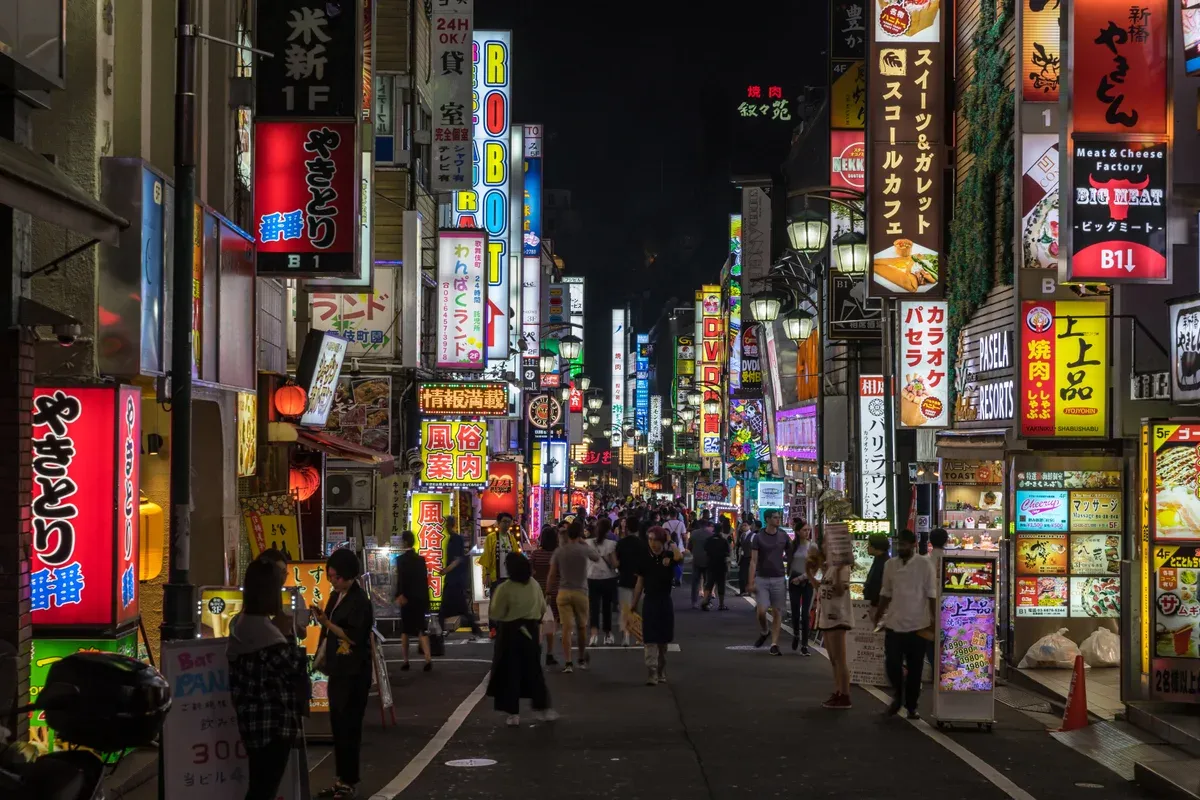
Evening departures finish inside this neon. Photo: Basile Morin, CC BY-SA 4.0, via Wikimedia Commons
Rain Policy: When Rides Run Anyway
Operators usually run tours despite the weather, so a grey forecast is not a reason to rebook. Karts are road-legal vehicles and the convoys move with the traffic, which continues in rain. One bay-side listing makes rain calls by conditions with the shop, meaning the operator checks the weather and decides jointly with riders rather than cancelling automatically.
The routes differ in how much rain they let you feel. The two-hour bay ride and the 75-minute premium route have the longest road time, so they feel the weather the most. If the forecast looks doubtful and you would rather not ride wet for two hours, the one-hour loops are the safer choice, or you can pick the premium route which carries a 24-hour free cancellation window instead of the usual seven days.
Cancellation windows at a glance
Because rain is the main reason plans change late, the cancellation rule matters as much as the forecast. Most listings here offer free cancellation seven days out, which will not help with a shower two days before. Three listings allow free cancellation up to 24 hours before the ride, and those are the ones to choose if your dates are fixed but your weather is uncertain.
| Tour | Free cancellation |
|---|---|
| Shibuya Street Go-Kart Tour | 7 days |
| Tokyo Tower & Shibuya Crossing Premium Go-Kart Tour | 24 hours |
| Tokyo Bay 2-Hour Go-Kart Tour over Rainbow Bridge | 7 days |
| Shibuya Crossing Go-Kart Tour with Photos | 24 hours |
| Asakusa, Skytree & Akihabara Go-Kart Tour | 24 hours |
| Akihabara Original Go-Kart Tour | 7 days |
One separate rule has nothing to do with weather but ruins more bookings than any storm: drivers who arrive without the accepted licence documents cannot join the ride and receive no refund. Every listing states this. Check the paperwork rules in Do You Need a License to Go-Kart in Tokyo? IDP Rules Explained before you lock in a date.
A rain-day plan beats a rain-day gamble. If the forecast turns, the morning message to the shop costs nothing and gets the operator's own call on conditions, which is the decision that actually governs bay-side and bridge routes. Travellers with flexible tickets should move the slot before the deadline rather than gamble it, and travellers on the seven-day windows should pick their slot with the forecast already in view.
The Days That Sell Out First
Spring dates go first. One major operator tells customers to book as early as possible for spring dates, and with convoys capped at five or six karts on the Shibuya rides and eight on the premium and east-Tokyo routes, a single morning slot holds very few drivers. Weekends and holiday periods follow the same logic in every season, since departures run through the day but each one is small.
The practical sequence is simple. If you are travelling in spring, book the moment your dates are fixed. If you are travelling at another time of year, book as soon as you know which day you want, and keep the 24-hour cancellation listings as your flexible options. Tokyo go-kart tours with prices compared shows every ride here side by side so you can check which slots still have space before you commit.
Checking in on the day
Whatever day you choose, plan the arrival properly. Riders check in 30 minutes early, store belongings in lockers, choose a washed costume, and get a controls-and-rules briefing before the convoy leaves. Check-in closes 30 minutes before the ride, and arriving late can forfeit the slot with no refund.
The Asakusa, Skytree & Akihabara Go-Kart Tour states the arrival rule explicitly: arrive 20 minutes before your start time at the Sumida base, on top of the standard 30-minute buffer the other listings describe. The full paperwork and timing details are collected in the Tokyo Go-Kart Documents Checklist: Papers, Clothes, Timing.
National holiday weeks deserve their own line in the calendar. Golden Week in late spring, the Obon stretch in August and the New Year window each behave like a supersized weekend: domestic travel piles onto the usual tourist flow, the operators' own calendars thin out, and the popular slots go weeks ahead. If your trip lands inside one of those windows, treat the kart booking as the first booking of the trip rather than the last.
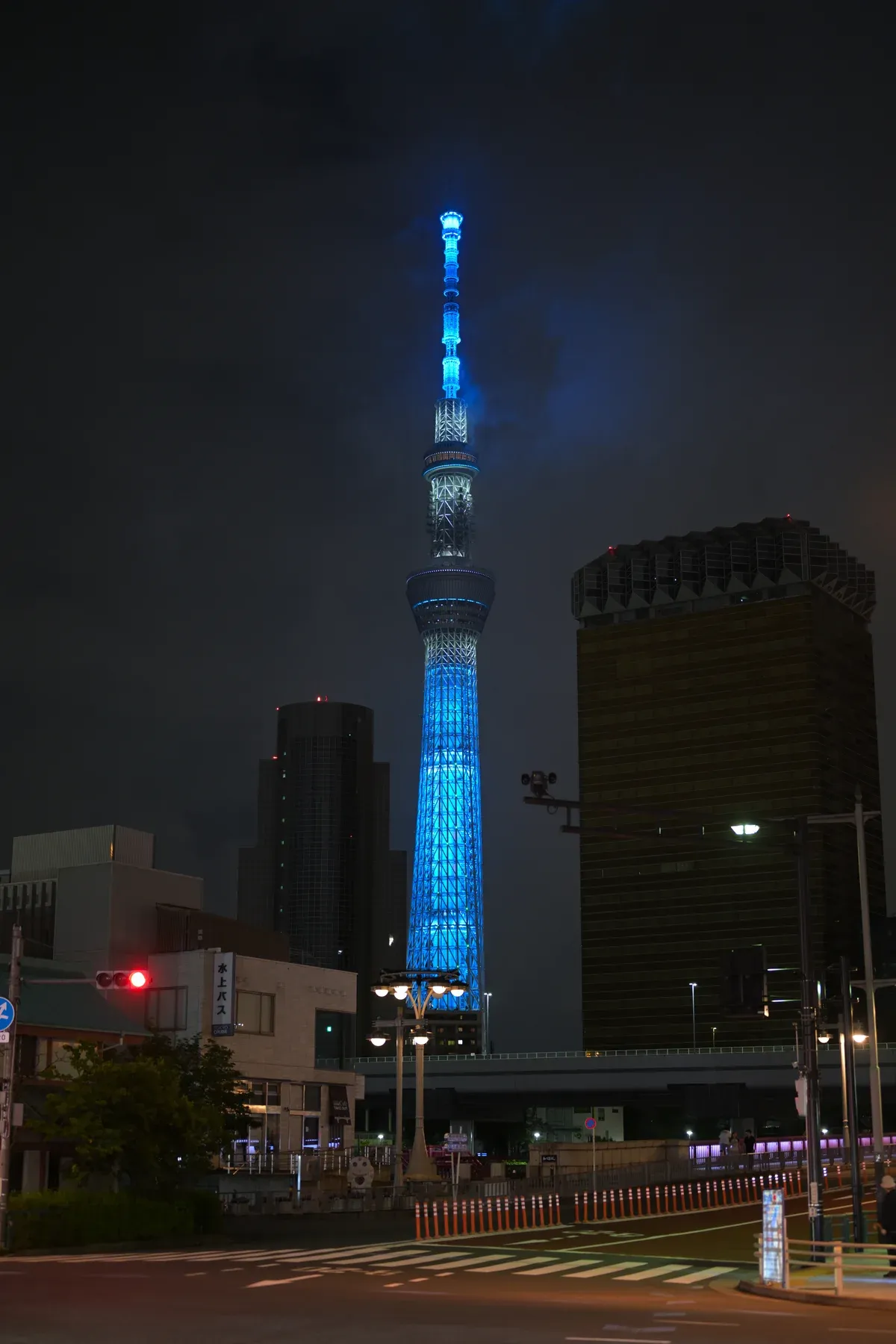
Skytree lit for the evening rides on the east loop. Photo: 4300streetcar, CC BY 4.0, via Wikimedia Commons
Best-Time Questions, Answered
The questions below cover the timing decisions that come up most often, from rush hour to winter clothing. For the broader question of whether the rides justify the price, see Is a Tokyo Go-Kart Tour Worth It? An Honest Verdict, and for how the two departure districts compare see Shibuya vs Akihabara Go-Kart Tours: Which Side to Ride.
Best-Time Questions, Answered
When is the best time to go karting in Tokyo?
Weekday morning departures meet the lightest traffic, which makes the driving calmer and the ride easier to enjoy. Spring is the operators' busiest season, so spring dates should be booked as early as possible. In summer, avoid midday because the open karts face heat and sun, and prefer morning or evening instead.
Is Tokyo go karting better at night?
Evening departures put riders in the city neon the neighbourhoods are famous for, and guide photos at the stops look completely different after dark. Traffic is busier than in the morning, but the guides adjust speed to judge the lights and keep the convoy together. If the pictures matter most to you, choose the evening slot.
Do Tokyo go-kart tours run in rain?
Operators usually run tours despite the weather, and one bay-side listing makes rain calls by conditions with the shop. The two-hour bay ride and the 75-minute premium route have the longest road time, so they feel the weather the most. If rain is likely, pick a one-hour loop or a listing with 24-hour free cancellation.
What should I wear for go karting in Tokyo in winter?
Winter rides need windproof layers and gloves, because the karts are open vehicles and wind chill at city speed is significant. Midday is the warmest winter slot and the one-hour loops are the shortest exposure. The shop provides a costume as part of the ride, so build your layers to fit under it.
When do Tokyo go-kart tours sell out?
Spring dates sell out first, and one major operator tells customers to book as early as possible for spring dates. Convoys are small, capped at five or six karts on the Shibuya rides and eight on the premium and east-Tokyo routes, so capacity is tight year round. Book the moment your travel dates are fixed.
Is rush hour bad for a Tokyo go-kart tour?
Morning departures meet the lightest traffic according to the operators themselves, so an early slot is the way to avoid the busiest roads. Evening departures trade some calm for the neon, with guides adjusting speed to keep the group together through the lights. Shibuya Crossing itself carries up to about 3,000 people per green light, but convoys cross it at car speed on the same signal cycle as everyone else, and safety background is covered in Is a Tokyo Go-Kart Tour Safe? Rules, Insurance, Reality.
Booking Windows and Clock Time
The booking calendar rewards two habits. First, book the season before you book the slot: spring dates are the operators' own warning zone, and one major operator tells customers to reserve as early as possible for the cherry-blossom stretch. Second, book the slot around the day's heat and light rather than around a clock habit: midday summer rides are the hottest seat in the catalog, and evening rides end inside the neon the districts are famous for.
Clock time also matters at check-in. Every format asks riders to arrive 30 minutes early, and the window is not padding: it covers document verification, the lockers, the costume pick and the safety briefing. Late arrivals compress that window or lose the seat, and the listings are explicit that lateness is not refunded.
Work backwards from the start time, not from the ride.
- Book spring first, slot second: the blossom stretch sells out first
- Arrive 30 minutes before the start on every format
- Evening rides end in the neon; morning rides meet the empty roads
- Changes are cheaper than cancellations: message the operator before the deadline