 Tokyo Go-Kart Tours
Do You Need a Licence to Go-Kart in Tokyo? IDP Rules Explained
Do you need a license to go kart in Tokyo? Yes, and it must be a document Japan accepts at the check-in counter. Yes, you need a real driver's licence to go-kart on Tokyo streets. Every street ride in the city uses public roads, so Japanese law treats kart drivers exactly like car drivers. You must show a 1949 Geneva Convention International Driving Permit paper booklet, a Japanese licence, or for a short list of countries a domestic licence plus an official Japanese translation from JAF. Digital copies, photos, photocopies and card-style permits are all rejected at check-in. Arrive without the accepted papers and you cannot join the ride, and every listing states you receive no refund. It is the rule that ruins more kart trips than any other. This page explains which documents Japan accepts, which licences cannot be used at all, how to get the right papersbefore you fly, and what check-in looks like when everything is right. When your documents are sorted, browse the full Tokyo go-kart tours comparison to pick your route.
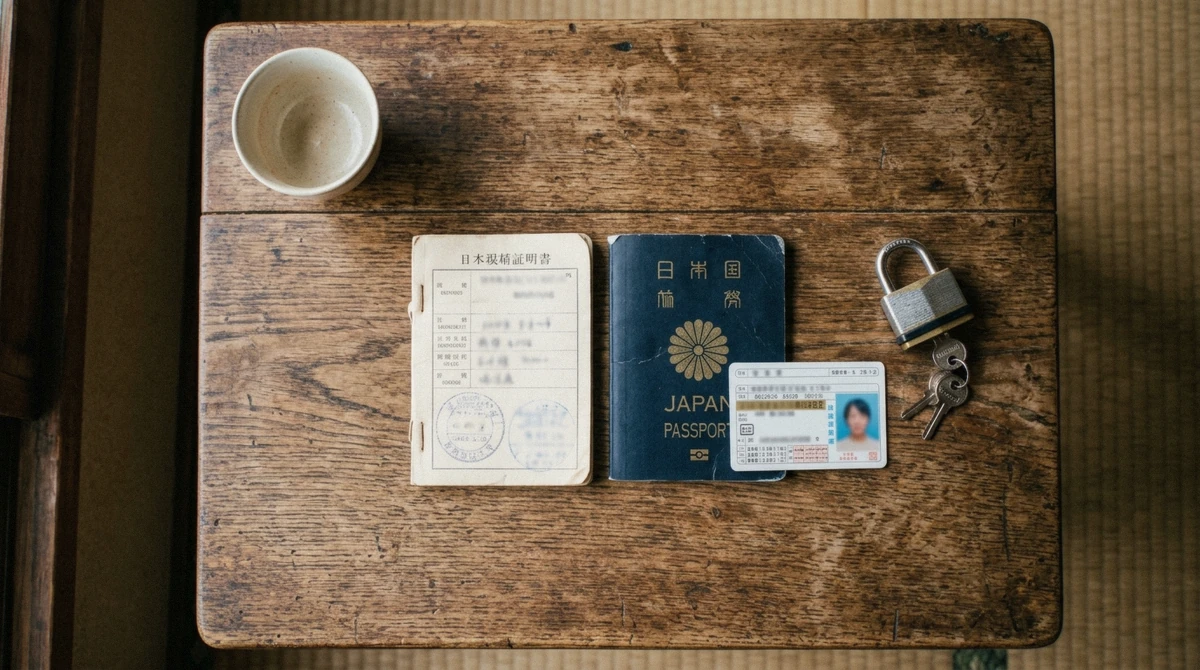
Check-in is where the licence rule bites: documents verified at the counter. Photo: Bject, CC BY 4.0, via Wikimedia Commons
Quick answer Yes: a 1949 IDP booklet or JAF translation, physical copies only, and no refund without them
Yes, you need a licence to go-kart in Tokyo because the tours drive on public roads. Japan accepts a 1949 Geneva Convention International Driving Permit paper booklet, a Japanese licence, or a domestic licence with an official JAF translation for a short list of countries. Digital copies, photos and 1968 Vienna Convention permits are rejected at check-in. Drivers turned away for invalid documents cannot join and receive no refund.
Key takeaways
- Get a physical 1949 Geneva Convention IDP booklet from your home motoring organisation, such as AAA in the United States or the AA in the United Kingdom, before you travel.
- Licences from Switzerland, Germany, France, Taiwan, Belgium, Monaco and Slovenia need a JAF Japanese translation instead of an IDP.
- Minimum age is 18 on every listing here and a regular car licence is enough, with no motorcycle endorsement needed.
- No documents, no ride, no refund: sort the paperwork before you fly
The Short Answer: Yes, You Need a Real Licence
There is no casual, licence-free option on Tokyo streets. The karts in this catalog are road-legal vehicles driven on public roads among real traffic, so every operator requires a recognised driver's licence from every participant. The accepted documents are a 1949 Geneva Convention format International Driving Permit paper booklet, a Japanese licence, or a domestic licence plus an official JAF Japanese translation for a specific list of countries.
Three details trip people up most often. First, the permit must be the physical paper booklet signed by the holder. Online copies, photos, photocopies and card-style licences are rejected at check-in.
Second, an IDP cannot be issued inside Japan or online after arrival, so it must come from the motoring organisation in your home country before you fly. Third, being turned away means no ride and no refund, a rule stated on every listing.
The minimum age is 18 across every listing here. A regular car licence is enough, and no motorcycle endorsement or racing licence is needed. If you are unsure whether a kart tour suits your group at all, the honest breakdown in Is a Tokyo Go-Kart Tour Worth It? An Honest Verdict covers the value question separately from the paperwork.
The 1949 Geneva Convention Booklet, Explained
Japan is a signatory to the 1949 Geneva Convention on Road Traffic, and the International Driving Permit it recognises follows that specific format. It is a small paper booklet, roughly the size of a passport, containing translations of your domestic licence. You sign it yourself, and you carry it together with your original licence and your passport.
Three details decide whether a permit booklet is valid for Japan. The format: it must be the 1949 Geneva Convention style, the paper booklet with the French-language cover, not the 1968 style and not a plastic card. The signature: the holder signs the booklet itself, and an unsigned booklet is incomplete.
The pairing: the permit is issued against a domestic licence by the motoring organisation of the same country, so the two documents must match, and the passport closes the set.
- It must be issued under the 1949 Geneva Convention format, not the 1968 Vienna Convention format
- It must be the physical paper booklet, not a card, a photo or a PDF on your phone
- It must be signed by the holder
- It must be accompanied by your original domestic licence
- It must be obtained before arrival, from a motoring organisation at home such as AAA in the United States or the AA in the United Kingdom
The most common expensive mistake is bringing the wrong convention. Many countries now issue 1968 Vienna Convention permits, and Japan does not recognise them for driving. IDA and IAA documents are also explicitly not valid, and operators reject them along with any digital version.
If your permit does not say 1949 on it, assume it will not work and check with your motoring organisation before you travel. The full document run-through lives in Tokyo Go-Kart Documents Checklist: Papers, Clothes, Timing.
The JAF Translation Countries: Switzerland, Germany, France and Friends
A handful of countries sit outside the 1949 system under bilateral arrangements with Japan. If your licence was issued in Switzerland, Germany, France, Taiwan, Belgium, Monaco or Slovenia, an IDP alone is not the answer. Instead you need an official Japanese translation of your domestic licence, produced by the Japan Automobile Federation, known as JAF.
The translation is a separate document you carry alongside your original licence and passport. Arrange it before your trip through the Japan Automobile Federation rather than leaving it to chance after landing. Drivers from these countries who show up with only a 1949 booklet and no translation have had their paperwork questioned at check-in, and the no-refund rule applies all the same.
Everyone else in the 1949 system, including holders of United States, United Kingdom, Canadian and Australian licences, takes the standard IDP route described above and does not need a JAF translation.
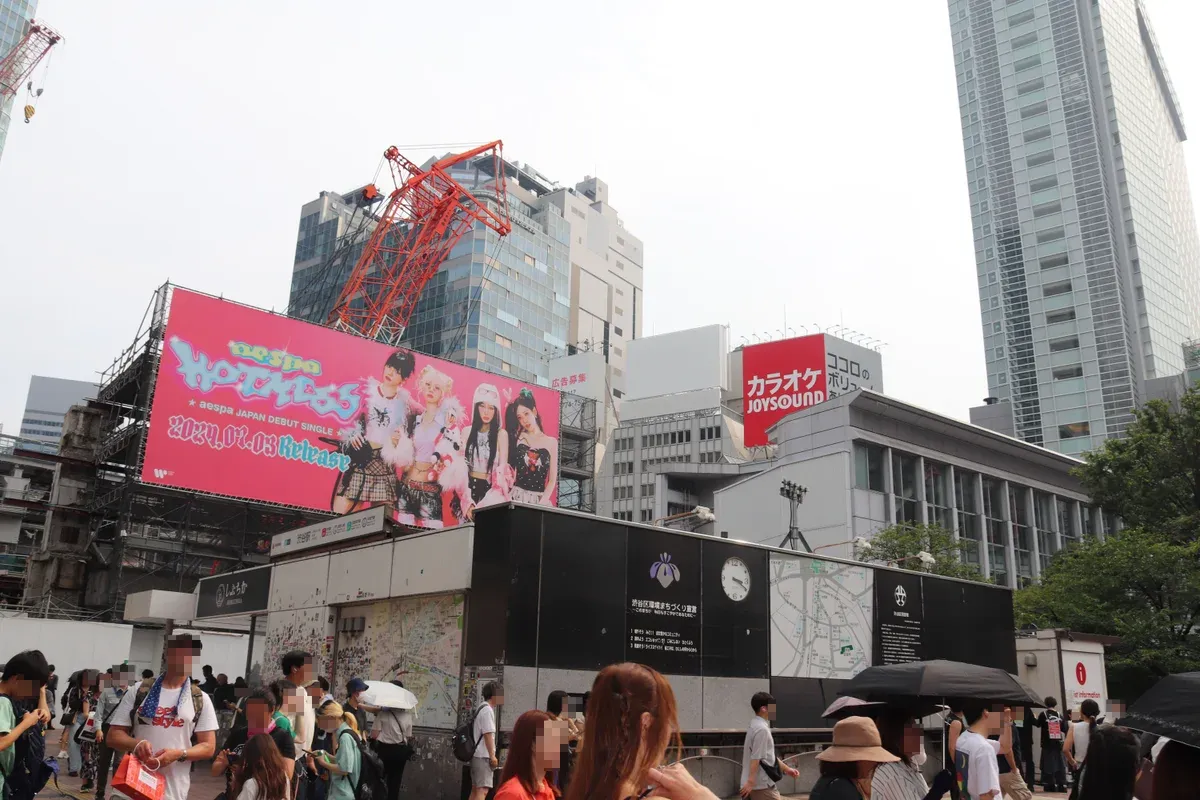
Check-in shops sit on streets like this one, a short walk from the station. Photo: Bject, CC BY 4.0, via Wikimedia Commons
Licences That Cannot Drive in Japan at All
Some licences cannot be used on Japanese roads under any paperwork. If you hold a licence from China, Indonesia, Mexico, Qatar or Saudi Arabia, no IDP, translation or other document lets you drive in Japan. That means you cannot join a street go-kart tour, because every one of these rides uses public roads and there is no closed-circuit workaround in this catalog.
This is worth checking before anyone in your group books. A traveller whose licence falls on this list should plan a different activity for that slot, and the rest of the group can still ride. Reviews in the catalog show how this plays out in practice, with one guest enjoying the tour but noting the rest of the family could not take part because they did not have international driver's licences.
- Not valid in Japan under any circumstances: China, Indonesia, Mexico, Qatar and Saudi Arabia licences
- Not valid for Japan: 1968 Vienna Convention permits, and IDA or IAA documents
- Valid: a 1949 Geneva Convention paper IDP booklet with your original licence
- Valid: a Japanese driving licence
- Valid for Switzerland, Germany, France, Taiwan, Belgium, Monaco and Slovenia: domestic licence plus an official JAF Japanese translation
How to Get the Right Documents Before You Fly
The process differs slightly by country, but the principle is the same. An IDP is issued by the national motoring organisation at home, not by any operator in Japan, and not online after arrival. It cannot be issued inside Japan at all.
- Confirm your licence is a physical card or paper document
- Apply to your home motoring organisation for the 1949-format IDP booklet
- Sign the booklet when it arrives, exactly as your licence signature reads
- Pack all three: licence, permit booklet, passport
- Bring the booking confirmation email on your phone
- Contact your national motoring organisation, such as AAA in the United States, the AA in the United Kingdom or CAA in Canada
- Request a 1949 Geneva Convention format IDP specifically, not a 1968 Vienna Convention permit
- Sign the paper booklet when it arrives and check the 1949 format
- Carry the booklet together with your original domestic licence and your passport
- Book your kart ride only once the documents are confirmed in hand
- Check whether your licence was issued in Switzerland, Germany, France, Taiwan, Belgium, Monaco or Slovenia
- Apply to the Japan Automobile Federation for the official Japanese translation
- Keep the translation with your domestic licence, both physical
- Skip the IDP entirely: the translation replaces it for these countries
- Bring the passport that matches your licence
- If your licence is from Switzerland, Germany, France, Taiwan, Belgium, Monaco or Slovenia, request an official Japanese translation from the Japan Automobile Federation (JAF)
- Carry the translation with your original domestic licence and passport
- No IDP is needed alongside the translation for these countries
Build in time for postage. Motoring organisations can issue permits quickly in person, but postal applications take longer, and a missing booklet on departure day cannot be fixed in Japan. Sort it before you book your ride, then compare options and compare Tokyo go-kart tours by price to find the slot and route that fits.
One clarification saves a lot of confusion at home: the document is often called an international driver's license by travellers, but the paper that works is the permit booklet described above. There is no such thing as an international driving licence card for Japan, and websites that sell one are selling a translation document that Japanese authorities and kart counters do not accept. Book nothing else until the correct booklet, or the JAF translation for the seven translation countries, is physically in hand.
What Check-In Looks Like When Your Papers Are Right
Once your documents are in order, the day itself is straightforward. Riders arrive 30 minutes before the booked start time with their passport and licence documents ready. Staff check the IDP booklet or JAF translation alongside your original licence, then the practical part begins.
- Arrive 30 minutes before your booked start time with passport and licence papers
- Store your belongings in lockers at the shop
- Choose a costume from the rail, all of which are washed between uses
- Sit through a controls-and-rules briefing before the convoy leaves
- Leave your cellphone in the locker, since phones cannot be used while driving
Photography is handled for you. Guides take photos at the stops, and action cameras can be rented at the shop if you want moving footage. Reviews in the catalog repeatedly praise this setup, with guests noting that guides took lots of photos and explained how not to break Japanese road laws, and advising new riders not to be tempted to take photos themselves while driving.
Insurance is included in every ride fee. One major operator lists the damage deductible at 50,000 yen per kart, about $340, and sells a full-coverage upgrade at the shop if you want the deductible removed. More on the safety framework is in Is a Tokyo Go-Kart Tour Safe? Rules, Insurance, Reality.
If Your Documents Fail: The No-Refund Rule
Every listing in this catalog states the same rule. Drivers who arrive without the accepted documents cannot join the ride and receive no refund. There is no grace period, no spot on a later departure and no partial credit.
The operator cannot legally let you drive without valid papers, and the booking terms put that risk on the traveller.
This is why the document check belongs at the top of your planning, not the bottom. A $70 booking on the Shibuya Street Go-Kart Tour is a small loss, but a family of four turned away from the Tokyo Tower & Shibuya Crossing Premium Go-Kart Tour loses $460 over paperwork that costs a few dollars and one errand at home.
The rides also carry free cancellation windows, ranging from 24 hours to 7 days depending on the tour, which helps if you discover a document problem in time. But those windows do not help on the day itself. Check your booklet says 1949, is signed, and is physical, and check any JAF translation is in hand, well before departure day.
For planning the rest of the day around your ride, timing advice is in The Best Time for a Tokyo Go-Kart Tour, and choosing between the two main departure districts is covered in Shibuya vs Akihabara Go-Kart Tours: Which Side to Ride.
If you are comparing rides once your paperwork is confirmed, the catalog covers six options at different prices and lengths. The table below lays them out side by side so you can match a tour to your budget and schedule, from the $61 Akihabara entry point to the $115 premium loop.
| Tour | Price | Duration | Rating | Reviews | Free cancellation |
|---|---|---|---|---|---|
| Akihabara Original Go-Kart Tour | $61 | 1 hour | 4.86 | 127 | 7 days |
| Shibuya Street Go-Kart Tour | $70 | 1 hour | 4.9 | 1,893 | 7 days |
| Shibuya Crossing Go-Kart Tour with Photos | $89 | 1 hour | 4.83 | 375 | 24 hours |
| Asakusa, Skytree & Akihabara Go-Kart Tour | $96 | 1h 10m | 4.66 | 783 | 24 hours |
| Tokyo Bay 2-Hour Go-Kart Tour over Rainbow Bridge | $105 | 2 hours | 4.82 | 112 | 7 days |
| Tokyo Tower & Shibuya Crossing Premium Go-Kart Tour | $115 | 1h 15m | 4.74 | 666 | 24 hours |
Tokyo Go-Kart Licence Questions, Answered
Can you go-kart in Japan without a license?
No. Street go-kart tours in Tokyo use public roads, so a recognised driver's licence is required on every listing. Arrive without accepted documents and you cannot join the ride and receive no refund.
What do you need for go-karting in Tokyo?
You need a physical 1949 Geneva Convention IDP booklet with your original licence, plus your passport, and you must be at least 18 with a regular car licence. Riders check in 30 minutes early, use lockers and pick a washed costume before a controls-and-rules briefing. Insurance is included in every ride fee.
Can kids drive go karts in Tokyo?
No. The minimum age is 18 on every listing here in this catalog, and a regular car licence is required. There is no child or passenger option listed.
Do you need your license for go-karting?
Yes, and it must be the physical original. Digital copies, photos, photocopies and card-style licences are rejected at check-in, and guides will not let you drive without them. The rules and insurance context are explained in Is a Tokyo Go-Kart Tour Safe? Rules, Insurance, Reality.
What countries' licenses work in Japan?
Licences from countries in the 1949 Geneva Convention system work with a matching paper IDP booklet. Switzerland, Germany, France, Taiwan, Belgium, Monaco and Slovenia licences need a JAF Japanese translation instead. Licences from China, Indonesia, Mexico, Qatar and Saudi Arabia cannot be used in Japan under any paperwork.
How do I get an IDP for Japan before my trip?
Apply through the motoring organisation in your home country, such as AAA in the United States, the AA in the United Kingdom or CAA in Canada, and ask specifically for a 1949 Geneva Convention format permit. An IDP cannot be issued inside Japan or online after arrival. Sign the paper booklet and carry it with your original licence and passport.
Reading the Permit Booklet: What the Counter Checks
The counter is checking three things on your permit booklet, and it is worth knowing them before you travel. First, the format: the booklet must be the 1949 Geneva Convention style, with the white cover and the French-language heading that format carries. Second, the signature: an unsigned booklet is incomplete at law, and counters turn unsigned booklets away.
Third, the validity dates and the issuing authority, which must be the motoring organisation of your licence's own country. A permit issued in one country against a licence from another does not travel.
The passport matters as much as riders expect it not to. The permit is only valid alongside the domestic licence and a passport that matches, and the counter pairs all three documents before handing over a kart. Digital copies of any of the three fail the check on every listing in this comparison, including photographs of the permit on a phone.
Motorcycle riders have an easier path than they expect. A car licence with the correct permit booklet is sufficient for the karts in this catalog, because the machines are registered in the low-speed moped-equivalent class. A motorcycle endorsement is not required, and neither is any kart racing licence or track certification.
The JAF Translation, Step by Step
Drivers licensed in Switzerland, Germany, France, Taiwan, Belgium, Monaco or Slovenia replace the permit booklet with an official Japanese translation of their domestic licence. The Japan Automobile Federation issues the translation, and the process exists for their benefit: those licences are not covered by the 1949 convention, so the translation is the instrument Japanese law accepts instead.
The translation can be arranged before travel through JAF's channels or after arrival at a JAF office in Japan, and the counter product is a physical document, not a screen. Riders choosing the after-arrival route should treat it as a dedicated errand with its own opening hours and processing time, not a same-morning stop on the way to the shop. The check-in standard is identical either way: physical translation, physical licence, physical passport, no photographs of any of them.
Why Riders Get Turned Away, Ranked
The refusal reasons repeat across reviews with a dull regularity, and they are all avoidable at home. The first is the permit format itself: travellers arrive with the 1968-style document or a card-shaped permit instead of the 1949 booklet, and no counter can accept it. The second is the unsigned booklet, which is incomplete at law and fails the check exactly as a missing one would.
The third is the mismatch: a permit issued in one country presented against a licence from another, or a passport left in the hotel safe.
Every one of these failures costs the full fare, and the listings say so in the plainest language they use anywhere on the page. The asymmetry is worth internalising: the paperwork is a one-hour errand at home, and the failure mode is a lost booking and a missed afternoon. Nothing else about these rides is as unforgiving as the document check, so let the document check set your preparation standard.
- Wrong permit format: 1968-style or card-shaped instead of the 1949 booklet
- Unsigned booklet: incomplete, refused like a missing permit
- Country mismatch: permit issuer and licence issuer must be the same country
- Passport missing from the counter check
- Digital copies of any document: refused on every listing