 Tokyo Go-Kart Tours
Shibuya vs Akihabara Go-Kart Tours: Which Side of Tokyo Should You Start From
Shibuya vs Akihabara go kart rides is the first real fork in the booking: it decides which Tokyo you drive through. Choose Shibuya if you want the famous scramble crossing and central Tokyo landmarks packed into one loop. Choose Akihabara if you want the cheapest ticket on the road and an anime-flavoured electric town departure. Both sides put you in a street-legal kart inside a guided convoy, and both ask for exactly the same licence paperwork, so the decision comes down to route, price and neighbourhood mood. Shibuya rides thread the scramble crossing at car speed. Akihabara rides roll out of the game and anime retail heartland, and the east loop adds Asakusa and Tokyo Skytree. This page puts the core rides compared here side by side on cost, ride time, convoy size and scenery. For the whole field, including the bay crossing and the premium loop, see the Tokyo street go-kart comparison and line up every option before you commit.
Shibuya's scramble, the west-side headline. Photo: Jorge Láscar from Melbourne, Australia, CC BY 2.0, via Wikimedia Commons
Quick answer Shibuya for the crossing and photos, Akihabara for price and anime streets
Shibuya is the better pick if the scramble crossing tops your list, because convoys cross it at car speed on the same signal cycle as everyone else. Akihabara wins on price, since the Akihabara Original Go-Kart Tour is the least expensive ride in the catalog at $61 for a full hour. Both sides run one-hour loops with six-kart convoys, so ride time is a wash. Shibuya has the review record, with the Shibuya Street Go-Kart Tour rated 4.9 across 1,893 reviews. Pick the side that fits the rest of your sightseeing day, and sort your 1949-format driving permit before either one.
Key takeaways
- Shibuya buys you the scramble crossing, Harajuku and Shinjuku. Akihabara buys you electric town plus the lowest price on this page.
- The cheapest Shibuya ride costs $70 and the cheapest Akihabara ride costs $61, both for one hour.
- A 1949 Geneva Convention IDP booklet or a JAF translation is mandatory on both sides. Arrive without it and there is no refund.
Shibuya or Akihabara: The Two Departure Sides of Tokyo
Tokyo's street kart tours split naturally into two departure zones. On the west side, the Shibuya shops send convoys out from Maruyama-cho into the streets around the scramble crossing, Harajuku and Shinjuku. On the east side, two bases serve the older, quirkier half of the city.
One shop sits in Sotokanda, the middle of Akihabara's electric town. The other sits in Sumida City, from where the east loop runs past Asakusa, Tokyo Skytree and Akihabara in a single circuit.
The character of the two sides is genuinely different. Shibuya Crossing is the world's busiest single pedestrian crossing, with up to about 3,000 people crossing per green light. Riding through it at car speed, on the same signal cycle as everyone else, is the single most recognisable kart moment in Tokyo.
Akihabara between Sotokanda and Kanda is Japan's electric town and anime retail district, so the atmosphere comes from the shops and signage you ride past and from the anime and game costumes available at the Akihabara shop.
What stays the same on both sides
The mechanics do not change with the postcode. Minimum age is 18 on all listings, a regular car licence is enough and no motorcycle endorsement is needed. You check in 30 minutes early, store belongings in lockers, pick a washed costume and sit through a controls-and-rules briefing before the convoy leaves.
Standard insurance is included in every ride fee, and guides take the photos at stops because cellphones cannot be used while driving. The licence rule is identical too: you need a 1949 Geneva Convention format IDP booklet, a Japanese licence, or a domestic licence plus an official JAF translation if your country sits outside the 1949 system. Our Do You Need a License to Go-Kart in Tokyo? IDP Rules Explained guide covers the paperwork in detail.
The Routes: What Each Side of the City Shows You
Route is where the two sides really diverge. Shibuya rides are built around the crossing itself. Akihabara rides are built around the electric town and, on the east loop, the historic and skyline highlights of east Tokyo.
Shibuya side routes
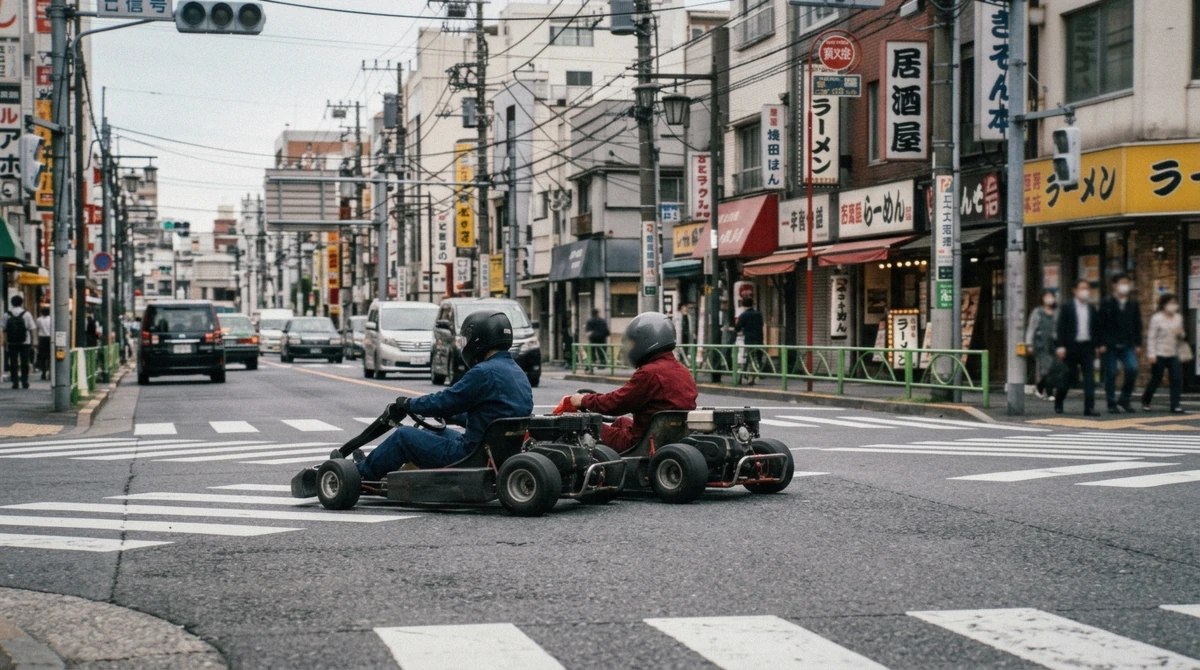
The Shibuya Street Go-Kart Tour is a one-hour guided loop from Maruyama-cho that crosses the scramble crossing several times from different directions, with a character costume from the shop rail. The Shibuya Crossing Go-Kart Tour with Photos is also one hour but pushes further, running from Shibuya through the crossing, Harajuku and Shinjuku with photo stops at central Tokyo landmarks. It runs the smallest convoy in the comparison at five karts.
If you have a bit more time and budget, the Tokyo Tower & Shibuya Crossing Premium Go-Kart Tour links Shibuya Crossing, Harajuku and Tokyo Tower in one 75-minute loop, with guide photos and the longest free-cancellation window among the west-side rides.
Akihabara side routes
The Akihabara Original Go-Kart Tour loops one hour from Sotokanda through the electric town and the Tokyo Station area, with anime and game costumes from the shop. The Asakusa, Skytree & Akihabara Go-Kart Tour runs 70 minutes from Sumida City past Asakusa, Tokyo Skytree and Akihabara. Skytree rises 634 metres over Sumida ward, the tallest structure in Japan, and the east loop passes through its shadow between Asakusa and Akihabara.
Note that this ride has a height and weight window that rules out taller and heavier riders, so check the requirements before booking. One thing neither side does: karts do not wear game branding. Nintendo sued a Tokyo kart operator over its game-adjacent branding and won in court, so operators today keep the game's name and character designs off the karts and describe costumes generically.
Which landmarks are on which side
Here is the landmark split at a glance, based on the published routes.
- Shibuya Crossing, crossed at car speed by the west-side rides, up to about 3,000 pedestrians per green light
- Harajuku, on both Shibuya street and premium loops
- Shinjuku, on the Shibuya photo ride
- Tokyo Tower, on the premium Shibuya loop, though the observation deck is a separate ticket and not part of any kart ride
- Akihabara electric town, on both east-side rides
- Tokyo Station area, on the Akihabara original loop
- Asakusa and Senso-ji, on the east loop from Sumida
- Tokyo Skytree, 634 metres, passed between Asakusa and Akihabara on the east loop
Price and Ride Time Compared
Pricing between the two sides is close but not identical, and the differences mostly buy you route length and extras rather than a better kart. Because cost per minute is the honest way to compare rides of different lengths, the table below lays out every relevant figure for the core Shibuya and Akihabara options together with the review counts that back them up. Use it to see what an extra few dollars actually buys on each side of the city.
| Ride | Departure side | Price | Duration | Convoy size |
|---|---|---|---|---|
| Shibuya Street Go-Kart Tour | Shibuya | $70 | 1 hour | 6 karts |
| Shibuya Crossing Go-Kart Tour with Photos | Shibuya | $89 | 1 hour | 5 karts |
| Tokyo Tower & Shibuya Crossing Premium Go-Kart Tour | Shibuya | $115 | 1h 15m | 8 karts |
| Akihabara Original Go-Kart Tour | Akihabara | $61 | 1 hour | 6 karts |
| Asakusa, Skytree & Akihabara Go-Kart Tour | Sumida | $96 | 1h 10m | 8 karts |
How to read the numbers
The Akihabara original loop is the least expensive way onto Tokyo's roads at $61. The Shibuya street ride costs $9 more for the same hour, which buys the scramble crossing instead of the electric town. On the Shibuya side, the photo ride costs $89 for the same hour as the $70 street ride, so the premium is the smaller five-kart convoy and the photo stops through Harajuku and Shinjuku.
The east loop from Sumida works out cheaper per minute than the Shibuya photo ride and throws in Asakusa and Skytree, but it carries a stricter height and weight window. Cancellation terms differ by departure: the Shibuya street ride and Akihabara original refund up to 7 days ahead, while the photo ride and east loop offer 24-hour cancellation. Prices checked and current .
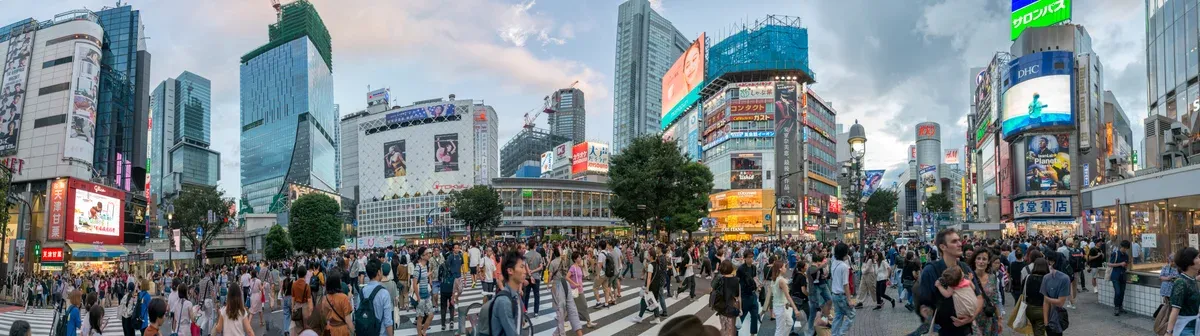
Shibuya's scramble, the west side's headline crossing. Photo: Jorge Láscar from Melbourne, Australia, CC BY 2.0, via Wikimedia Commons
Crowds, Convoy Size and Photos
Convoy size shapes the feel of the ride more than most people expect. Small groups keep the formation tight, make traffic lights together and give the guide an easier job keeping everyone safe. Here is how the fleets compare.
- Shibuya Crossing Go-Kart Tour with Photos: 5 karts, the smallest convoy in the comparison
- Shibuya Street Go-Kart Tour: 6 karts
- Akihabara Original Go-Kart Tour: 6 karts
- Tokyo Tower & Shibuya Crossing Premium Go-Kart Tour: 8 karts
- Asakusa, Skytree & Akihabara Go-Kart Tour: 8 karts
Photos are handled the same way on both sides of the city. Cellphones cannot be used while driving, guides take the photos at stops and action cameras can be rented at the shop. Verified reviews lean heavily on this.
One rider on the Shibuya street ride said the guide took lots of photos and kept the group safe throughout. Another wrote that their guide adjusted speed to judge lights and keep the group together. A third advised future riders plainly: do not be tempted to take photos yourself, the guides take them for you.
On the Akihabara side, the Sumida loop includes guide photos in the price, and the Shibuya photo ride makes photo stops its central feature.
Crowd experience splits differently. On the Shibuya side the crowds are the point, since the scramble crossing swallows up to about 3,000 people per green light and your convoy joins that cycle. On the Akihabara side the crowds are around you rather than under your wheels, with the electric town's retail bustle along the route and the east loop threading between Asakusa and Skytree.
Neither side publishes per-slot availability, so booking early matters most in peak season. Our Best Time for a Tokyo Go-Kart Tour guide covers the seasonal picture. One honest note from a verified review of a Shibuya ride: following all the rules and holding tight formation can feel demanding, so expect concentration rather than a cruise.
Which One Fits Your Day
Both sides deliver the same core thrill. Choose by what else your day holds and what you most want to see from the driver's seat.
- Book Shibuya if the scramble crossing is your must-see. The street ride crosses it several times from different directions for $70.
- Book the Shibuya photo ride if you want the smallest convoy at five karts and photo stops through Harajuku and Shinjuku for $89.
- Book the premium Shibuya loop if you want Tokyo Tower added, 75 minutes, costume and guide photos for $115.
- Book the Akihabara original loop if budget leads. At $61 it is the cheapest hour on Tokyo's roads in this catalog.
- Book the east loop if Asakusa and Skytree appeal more than the scramble, at $96 for 1h 10m, and you fit the height and weight window.
- Book Akihabara if you are an anime fan who wants to ride out of the electric town in an anime or game costume.
If your itinerary already favours one side
Geography is a fair tiebreaker. If your hotel and the rest of your day sit in Shinjuku, Harajuku or anywhere on the Yamanote west side, a Shibuya departure saves travel time. If you plan mornings in Asakusa or an afternoon in Akihabara's shops, the east-side departures fit neatly around them.
If you cannot decide between the two areas at all, our page on which go-kart departure area is best, and the wider question of Is a Tokyo Go-Kart Tour Worth It? An Honest Verdict, may help you commit. Before you book either side, run through our Tokyo Go-Kart Documents Checklist: Papers, Clothes, Timing so check-in goes smoothly. Remember that drivers who arrive without accepted documents cannot join the ride and receive no refund, and IDPs cannot be issued inside Japan or online after arrival.
Safety and rules in brief
Safety terms are consistent across the catalog. Standard insurance is included in every ride fee, one major operator lists the damage deductible at 50,000 yen per kart, about $340, and sells a full-coverage upgrade. Minimum age is 18 and a regular car licence is enough.
For the fuller picture, see Is a Tokyo Go-Kart Tour Safe? Rules, Insurance, Reality.
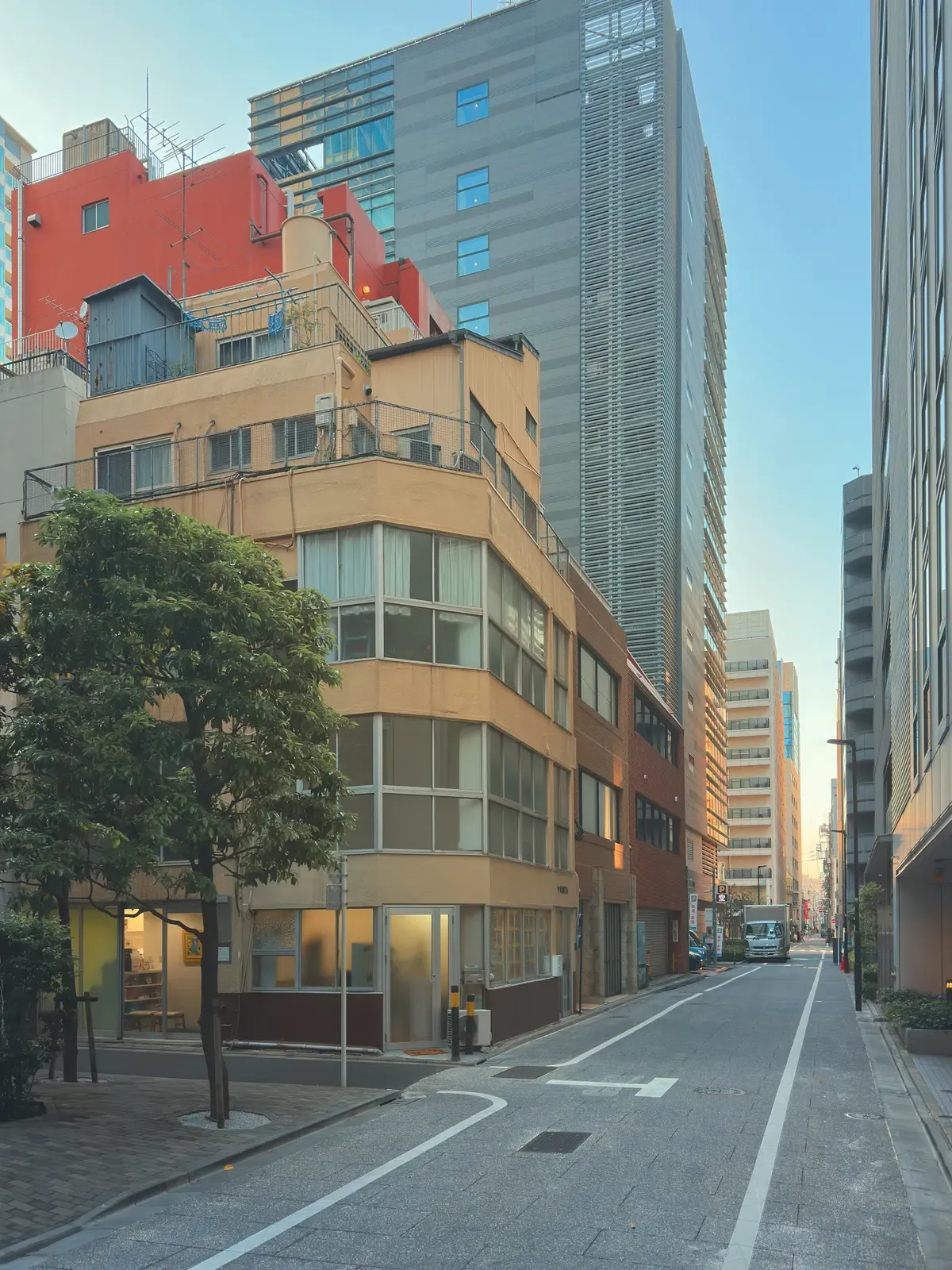
Akihabara's retro-future streetscape, the east side's home turf. Photo: DLKR from Tokyo, Japan, CC0, via Wikimedia Commons
Shibuya vs Akihabara Questions, Answered
Which is the best go-kart experience in Tokyo?
By review weight, the Shibuya Street Go-Kart Tour leads the catalog at 4.9 across 1,893 verified reviews, which makes it the safest statistical bet. Best is personal, though. If the scramble crossing is your dream, the Shibuya rides deliver it.
If price or anime atmosphere matters more, the Akihabara original loop rates 4.86 across 127 reviews and costs $61. The full field is on compare all six Tokyo go-kart rides.
Which go-kart departure area is best in Tokyo?
Shibuya for landmark density and the crossing, Akihabara for price and electric town character, Sumida for Asakusa and Skytree. There is no single best area, only the best fit for your day. Both sides require the same 1949 Geneva Convention IDP booklet or a JAF translation, so paperwork should not decide it.
What do locals think of the go-karts in Tokyo?
Not stated in the source material, so we cannot quote local opinion directly. What the records do show is how convoys operate within traffic: karts cross the scramble crossing on the same signal cycle as pedestrians, guides brief riders on road rules before departure and one verified reviewer praised their guide for explaining how not to break Japanese road laws. Operators also keep game branding off the karts following Nintendo's successful lawsuit, which suggests the industry has adapted to outside pressure.
How much is go karting in Shibuya?
The Shibuya Street Go-Kart Tour costs $70 for one hour. The Shibuya Crossing Go-Kart Tour with Photos costs $89 for one hour in a five-kart convoy, and the Tokyo Tower & Shibuya Crossing Premium Go-Kart Tour costs $115 for 1h 15m. Standard insurance is included in every fee, and cancellation windows range from 24 hours to 7 days depending on the ride.
Is the Akihabara go-kart tour good for anime fans?
Yes. Akihabara between Sotokanda and Kanda is Japan's electric town and anime retail district, and the Akihabara Original Go-Kart Tour departs from Sotokanda with anime and game costumes from the shop. One caveat for purists, the karts themselves carry no game branding or character designs, because Nintendo sued a Tokyo kart operator over game-adjacent branding and won.
Costumes are described generically at check-in.
Which Tokyo go-kart route has the fewest karts?
The Shibuya Crossing Go-Kart Tour with Photos runs the smallest convoy in the comparison, limited to 5 participants. It costs $89 for one hour through Shibuya, Harajuku and Shinjuku. Every other ride on this page runs 6 to 8 karts, so if a tight formation matters to you, this is the one to book.
Shibuya vs Akihabara Questions, Answered
Which is the best go-kart experience in Tokyo?
By review weight, the Shibuya Street Go-Kart Tour leads the catalog at 4.9 across 1,893 verified reviews, making it the strongest statistical pick. Best is personal, though. Shibuya delivers the scramble crossing, while the Akihabara original loop delivers the lowest price at $61 and an anime-town departure.
Which go-kart departure area is best in Tokyo?
Shibuya for landmark density and the crossing, Akihabara for price and electric town character. Both sides run one-hour loops with six-kart convoys and identical licence rules, so choose by scenery and budget rather than by any quality gap.
What do locals think of the go-karts in Tokyo?
Not stated in the source material. What the records do show is that convoys cross the scramble on the same signal cycle as pedestrians, guides brief riders on road rules before departure, and operators keep game branding off their karts after Nintendo's successful lawsuit over game-adjacent branding.
How much is go karting in Shibuya?
The Shibuya street ride costs $70 for one hour. The photo ride costs $89 for the same hour in a five-kart convoy, and the premium loop linking Shibuya Crossing, Harajuku and Tokyo Tower costs $115 for 1h 15m. Standard insurance is included in every fee.
Is the Akihabara go-kart tour good for anime fans?
Yes. The departure point in Sotokanda sits in Japan's electric town and anime retail district, and the tour includes anime and game costumes from the shop. The karts themselves carry no game branding or character designs, since Nintendo sued a Tokyo operator over that and won, so costumes are described generically.
Which Tokyo go-kart route has the fewest karts?
The Shibuya Crossing Go-Kart Tour with Photos runs the smallest convoy in the comparison, limited to 5 participants, at $89 for one hour through Shibuya, Harajuku and Shinjuku. All other rides on this page run 6 to 8 karts.
Reading the Choice: Price, Time, Crowd
Price and crowd size move in opposite directions on the two sides. The Akihabara original is the cheapest ride in this comparison at $61, and its six-kart convoy departs from the loudest people-watching district in the city. The Shibuya street ride costs $70 and carries the catalog's strongest record, 4.9 across 1,893 verified reviews, while the Shibuya photo ride trades $9 more for a five-kart convoy and posed photo stops.
Ride time is closer than the prices suggest: both signature loops run about an hour. The difference is what fills the hour. Shibuya fills it with the scramble crossing and the premium branding streets; Akihabara fills it with the electric town, the anime shopfronts and, on the east loop, the temple district and the tower.
Match the hour to the traveller, not to the map.
- Cheapest ride: Akihabara original, $61 for one hour
- Strongest record: Shibuya street ride, 4.9 across 1,893 verified reviews
- Smallest convoy: Shibuya photo ride, five karts
- Cultural landmarks: the east loop past Asakusa and Skytree, $96